

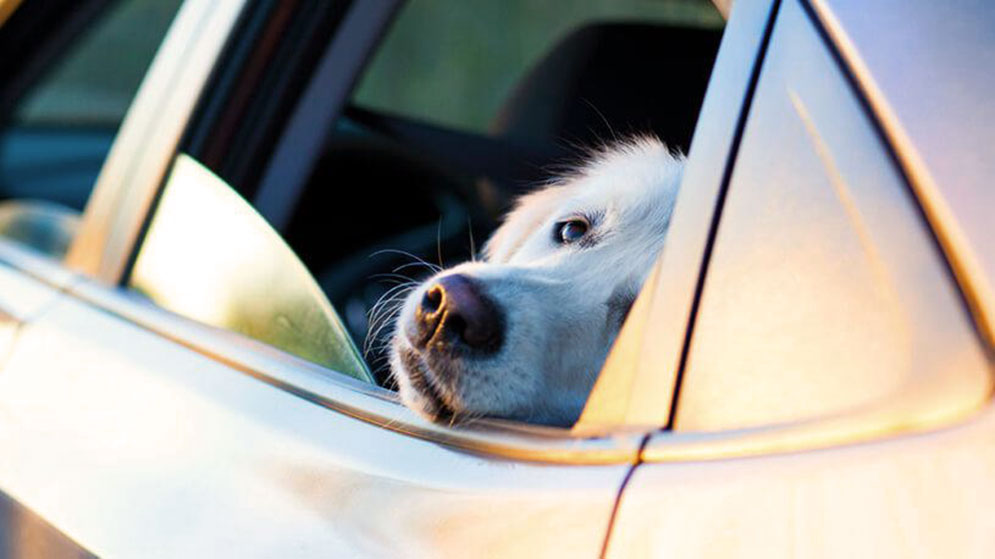
How to stop a dog overheating in a car: dos and don'ts
And what to do if you spot a dog at risk
All of our content is approved by our in-house experts
Responsible dog owners know you should never leave a dog in a car on a hot day, but what should you do if you see someone else's pet locked in a vehicle?
- What you can do if you see a dog trapped in a hot car
- Recognising the signs of canine heat stroke
- How to administer first aid to the dog
Have you ever spotted a dog in a car on a hot day? Perhaps the owner left while the sky was cloudy, or thought leaving the window ajar was enough. As the weather warms up, though, cars can become stifling – opening a window and parking in the shade is simply not enough.
Helping a dog who's trapped in a hot car could save its life, but what should you do first?
Do
- Call 999 if the dog is in distress. Why not the RSPCA? ‘In an emergency, we may not be able to attend quickly enough,’ says a spokesperson for the charity, ‘and with no powers of entry, we’d need police assistance at such an incident’. The police can respond quickly and will alert the RSPCA if animal welfare assistance is needed.
- Provide the police and the RSPCA with the car's registration number, colour, make, model and location
- Give the police and the RSPCA information about the condition of the dog
- If you can, establish how long the dog has been in the car – a pay and display ticket may help if the car is in a car park.
- If it's definitely not an emergency, then start by trying to track down the owner. If the car park belongs to a shop or business, they may be able to contact the driver. For example, a supermarket could make an announcement.
- You can also call the RSPCA cruelty line for advice on 0300 1234 999, but always dial 999 first in an emergency
Don’t
- Attempt to break into the car, because it's criminal damage – unless you're prepared to defend yourself under the Criminal Damage Act 1971. You would need to demonstrate the owner would have consented to the damage if they knew the circumstances, as well as witness testimonies and photographic or video evidence to show the dog's life was at risk
- Leave the dog alone – ask someone to help you so that one of you can stay with the dog to monitor his condition, while the other person looks for the owner. Be prepared to call 999 if the dog's condition deteriorates
- Lose your temper with the owner should they return – you both need to act as quickly as possible to help the dog
If you see a dog in distress, call 999.
Spotting signs of heatstroke
When a dog is hot, they pant to cool down, but if the heat is too much, panting fails to lower their body temperature. They can then develop heatstroke, which is potentially fatal. Signs of heatstroke in dogs are:
- Heavy panting
- Excessive drooling
- Lethargy
- Drowsiness
- Lack of coordination
- Collapse
- Vomiting
These signs could mean the dog's life is in imminent danger, and you should contact a vet immediately.
Some dogs are at a higher risk of heatstroke than others. High risk groups include old or young dogs, animals with thick coats, or those with short flat faces, like pugs and bulldogs. Certain medications or diseases can also increase a dog's risk.
Safe canine first aid
When you see a dog with heatstroke, fast action can be life-saving. You should gradually reduce their body temperature, as this offers the best chance of survival.
- Take the dog to a cool place in the shade
- Pour cool, not cold, water over the dog to prevent shock. Use wet towels to cool the animal, or use a fan – the cool breeze can help
- Supply small amounts of cool drinking water to help the dog cool off
- Continue to pour cool water onto the dog until it's breathing more normally, but ensure you don't make the dog so cool that it starts to shiver
- While carrying out the cooling process contact the owner’s vet and aim to get the dog there as soon as possible. If you don’t know who the owner’s vet is, or their vet isn’t nearby, find one that is, potentially your own, and inform them of the situation
You should also make sure you keep the dog as cool as possible during the journey to the vet.
How to keep your own dog safe in the car
As well as knowing how to help dogs that are suffering in hot cars, it’s important to make sure that you don’t leave your own pet in a similar situation.
Even if the sky is overcast, or you’re just popping into the shop for five minutes, you should never leave your dog in the car. With the advice above, you can play your part in helping other people’s dogs if they’re in distress.